If you have a broken key in ignition, do not start the engine or force the fragment deeper. Safely extracting it requires specialized tools like spiral extractors to bypass delicate wafer tumblers. If the key is deeply lodged, call an automotive locksmith immediately to prevent costly steering column damage.
Attempting to clear a stuck ignition without the proper assessment usually pushes the metal deeper. The sections below explain correct extraction protocols, precise tool selection, and when to request professional help.
What Is Professional Ignition Key Extraction?
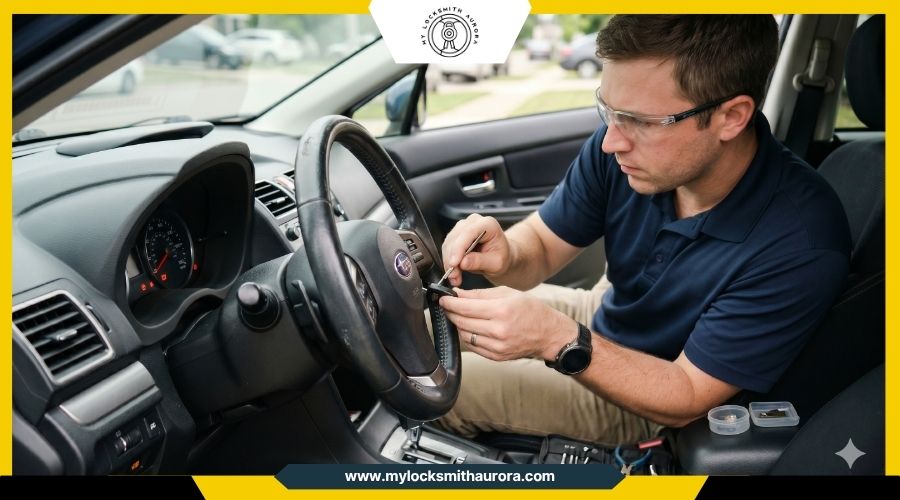
Professional key extraction removes the metal fragment while protecting the ignition cylinder and internal wafers.
A certified technician uses specialized, non-destructive tools like spiral extractors or extraction forceps. This precise method prevents damage to the steering column locking mechanisms and transponder chip readers. It keeps the ignition fully operational and avoids costly hardware replacement.
Do not use makeshift tools. Pliers, adhesives, or raw force usually push the fragment deeper into the keyway and destroy the delicate internal springs.
How to Assess Your Ignition Before Removing a Broken Key
Always evaluate the ignition cylinder before you try to remove a broken key. Vehicle ignitions are highly complex. Forcing a tool into the keyway will bend the internal wafers and damage the active anti-theft system.
Assess your specific situation:
- Fragment visibility: Safe for careful DIY extraction only if a significant portion of the key fragment protrudes past the face of the ignition lock.
- Deeply snapped blades: Avoid DIY removal entirely. Ignitions contain sensitive electronic transponders and mechanical wafers that break easily.
Inspect the depth of the broken blade. This assessment dictates your next steps. Do not turn the steering wheel, as engaging the steering lock will compress the broken fragment further.
What Are the Best Tools to Extract a Broken Ignition Key?
Use the correct tools to extract a broken key safely. The right equipment minimizes friction and grips the jagged edge of the key blade.
Here are the correct tools for the job:
- Dry lubricant (PTFE): Coat the keyway to reduce friction without leaving a sticky residue.
- Spiral key extractor: Use a professional grooved tool designed to catch the milled cuts of the automotive key.
- Needle-nose pliers: Apply these only if a large section of the key extends well past the ignition face.
- Specialized extraction forceps: These thin, serrated forceps grip flat key blades without pressing against the cylinder walls.
A dry lubricant helps the broken piece slide out. Avoid oil-based products that attract dust and cause mechanical failure over time.
Does Insurance Cover a Broken Key in Ignition?
Liability for a broken ignition key depends on your coverage and the cause of the damage.
- Vehicle Warranty: If the key snapped due to metal fatigue or a defective ignition cylinder on a newer vehicle, your manufacturer warranty may cover the extraction and replacement.
- Roadside Assistance: Standard auto insurance rarely covers lost or broken keys. However, roadside assistance plans, such as those provided by AAA, frequently cover vehicle lockouts and automotive key extraction up to a certain mileage or cost limit.
Check your specific policy details before scheduling a repair.
Why You Must Avoid Super Glue and DIY Extraction Hacks
Avoid household hacks when dealing with a broken key. These methods frequently cause irreversible damage to the ignition cylinder.
Super glue is highly destructive. It spreads into the keyway, bonds the wafer tumblers to the cylinder housing, and ruins the mechanism completely. If glue touches the transponder ring, the car will fail to recognize any future keys.
Likewise, jamming paperclips or bobby pins into the lock bends the delicate internal springs. Use professional tools or request emergency assistance.
How to Prevent a Snapped Ignition Key
Regular maintenance prevents key breakage. Follow these steps to keep your hardware functioning smoothly.
- Inspect keys regularly and discard any with hairline cracks or bent blades.
- Never force a key to turn a stiff ignition cylinder. If the steering wheel is locked, gently wiggle the wheel while turning the key.
- Avoid heavy keychains. Excess weight pulls downward on the ignition cylinder while driving, causing premature wear.
- Understand your vehicle’s systems. For example, know how to unlock a frozen door lock safely without snapping your key in the door, and know why your key fob isn’t working after a battery change to avoid relying entirely on a worn physical key.
- Always use high-quality, properly milled duplicate keys.
Metal fatigues over time. Proactive replacement prevents sudden emergencies.
When to Call an Automotive Locksmith
A broken ignition key requires immediate attention. If the metal fragment is stuck deep inside the keyway, contact a professional to safely extract it.
My Locksmith Aurora is a locksmith company in Aurora, CO, specializing in emergency lockout services for homeowners, businesses, and vehicle owners. Contact our certified technicians for prompt, damage-free service from an expert automotive Locksmith in Aurora, CO.
Frequently Asked Questions
Can I start my car with half a broken key?
No. Modern vehicles use passive anti-theft systems. Even if you can turn the ignition cylinder with the remaining piece of the key, the immobilizer system will not detect the transponder chip correctly, and the engine will not start.
What happens if I hire an unlicensed mechanic or locksmith?
Unlicensed technicians increase the risk of ignition damage and poor workmanship. They also lack insurance. Always verify a company’s credentials and liability coverage before letting them work on your vehicle’s steering column.
What are the safest tools to remove a broken key?
Professional spiral extractors, hook picks, and dry lubricants work best. Avoid makeshift objects like safety pins, which compress the lock wafers and worsen the jam.
Should I use oil or WD-40 inside a broken ignition?
Never put oil-based lubricants inside a lock cylinder. Oil attracts dirt and creates internal grime, which will eventually freeze the wafers. Apply a dry PTFE spray to ensure smooth operation.